Classic 1957 Jaguar XK150 impresses on modern test
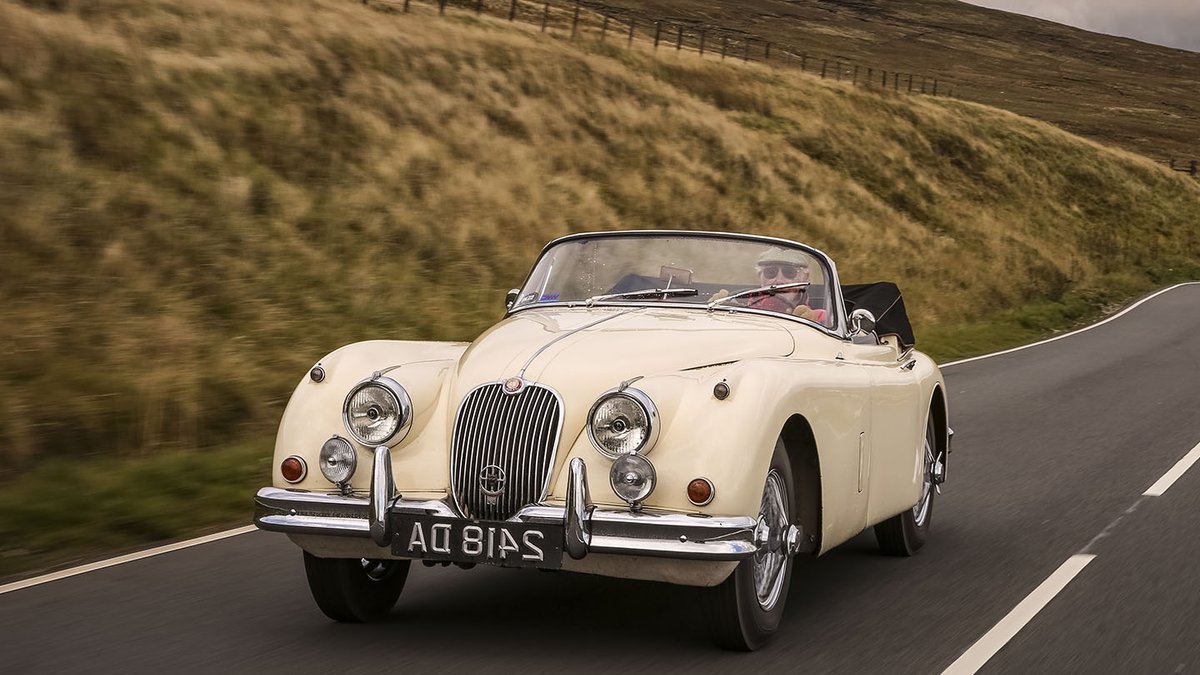
The 1957 Jaguar XK150 still draws admiration as a benchmark sports car, a claim that survived a recent drive by a classic-car enthusiast who put the vehicle through contemporary road conditions.
When Jaguar launched the XK150, it refined a decade of development from the XK120, adding a single-piece windscreen, a modern dashboard and disc brakes on all four wheels. The model also featured independent front suspension and a solid rear axle, a combination that set new handling standards for its era.
Power came from a 3.4-litre straight-six engine, delivering brisk acceleration. Official figures list a 0-62 mph (0-100 km/h) time of about 8.0 seconds and a top speed near 130 mph, numbers that were remarkable in the late 1950s.
During a damp-weather gathering in Scotland, Andrew Martin, a director of the Jaguar Drivers’ Club and ambassador for the Jaguar Daimler Heritage Trust, offered the XK150, still in pristine condition with 95,000 miles on the odometer, for a test. The writer accepted without hesitation.
Inside the cabin, the steering wheel feels roughly twice the size of a modern wheel, and the pedals sit far to the right. “Sure, the steering wheel feels like it’s about twice the size of a modern one and the pedals are so far offset to the right that you feel like you might as well put your feet outside the car, but you adapt to these quirks far more easily than you might think,” the driver recalled.
Read Also: Jaguar unveils electric Type 01 GT
Turn-in response is surprisingly solid, thanks to the independent front suspension. The massive front wheel does not merely suggest direction; it follows the driver’s input accurately. The solid rear axle contributes to straight-line stability, keeping the car feeling quick even by today’s standards.
The engine’s induction note under throttle is described as “heavenly,” with carburetors splitting the air in a distinctive soundtrack. When the throttle is eased, the cabin becomes quiet, and the ride is smoother than many modern equivalents, aided by low kerb weight and tall sidewall tires.
While the Moss four-speed gearbox lacks a synchromesh on first gear, requiring slow, precise shifts, it reflects the technological limits of its time. The gear layout feels unconventional, demanding more driver attention than contemporary manual sports cars.
Beyond performance, the XK150’s aesthetic appeal endures. Its sleek lines and proportioned grille continue to attract admiration, reinforcing its status as an automotive design milestone.


