H2Sky unveils aviation fuel‑cell stack breakthrough
Germany’s H2Sky research project has delivered a new fuel cell stack designed specifically for aviation, marking a milestone in the country’s push toward hydrogen‑powered flight.
Project overview and funding
The initiative, launched in 2022, wrapped up this year under the National Innovation Programme for Hydrogen and Fuel Cell Technology. It received roughly €26.5 million from the Federal Ministry for Digital and Transport, making it one of the largest German efforts focused on hydrogen fuel cells for aircraft.
Led by Aerostack—a joint venture between Airbus and ElringKlinger—the consortium also included EKPO Fuel Cell Technologies, Hahn‑Schickard, the Fraunhofer Institute for Solar Energy Systems ISE, the Technical University of Munich, the Centre for Solar Energy and Hydrogen Research Baden‑Württemberg, and the University of Freiburg. Coordination came from the national organisation NOW and Project Management Jülich.
Technical details of the stack
The core achievement is a fuel cell stack capable of delivering between 100 and 200 kW, intended to drive an electric motor that powers a propeller or engine. Aviation applications demand high power density, efficiency, reliability, and a long lifespan, and the stack was engineered to meet those criteria.
Related: EU tariffs push Western firms out as BYD advances
Specific performance metrics have not been released, but the project’s reports note that the stack’s design addresses the “particularly high demands of aviation.” According to the ministry, the technology now sits at a higher level of technological maturity than earlier prototypes.
“In the H2Sky project, we successfully advanced fuel cell technology to meet aviation requirements and significantly increased its technological maturity,” said Andreas Hubert, CEO of Aerostack. He added that the results lay a “robust foundation for the next steps in preparing the technology for market readiness.”
Fuel cell stacks are only one component of a full hydrogen powertrain. A complete system also needs cryogenic tanks for liquid hydrogen at –253 °C, thermal management, and power electronics. Certification and extensive testing will still be required before any aircraft can be certified for commercial use.
Germany’s Minister for Digital and Transport Patrick Schnieder emphasized the broader goal, stating, “Climate‑friendly mobility will succeed where innovation and competitiveness go hand in hand. In aviation, hydrogen plays a key role.” He noted that projects like H2Sky illustrate German ingenuity driving progress toward low‑emission air travel.
Related: BMW unveils electric iX3 in South Korea
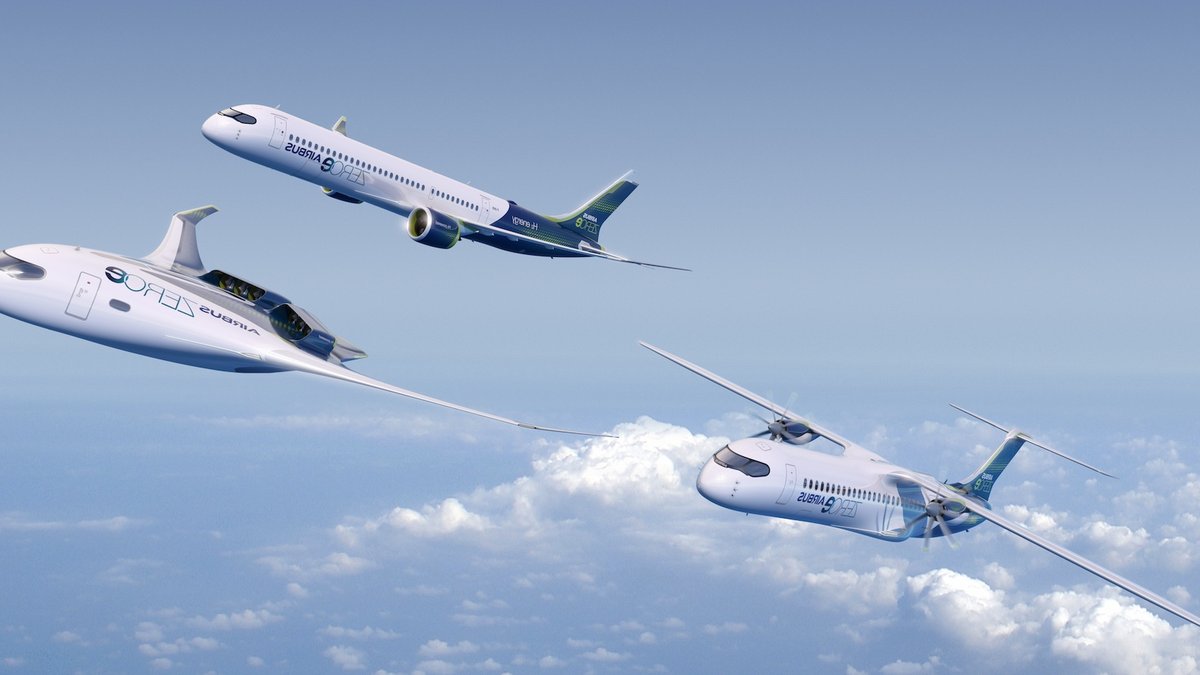
While Airbus originally aimed for a 2035 debut of hydrogen‑powered aircraft under its ZeroE programme, the company has since shifted the target to around 2040. The ministry’s press release deliberately avoided the word “aircraft,” reflecting the reality that a commercial fuel‑cell‑powered plane is still several years away.
The new GENtwoPRO project, launched by Airbus, Aerostack, the PEM Chair of RWTH Aachen University, and the German Aerospace Centre, will build on H2Sky’s results. Its goal is a scalable fuel cell system for regional aircraft with up to 100 seats.
In the meantime, the H2Sky stack’s development provides a tangible proof point for regulators and manufacturers alike. By delivering a demonstrable 100‑200 kW unit, the project helps define the engineering parameters that future certification bodies will evaluate.
Overall, the H2Sky effort represents a concrete step toward the broader vision of hydrogen aviation, even if the commercial reality remains several years out.


