Nissan plans rugged SUV push to rival Toyota
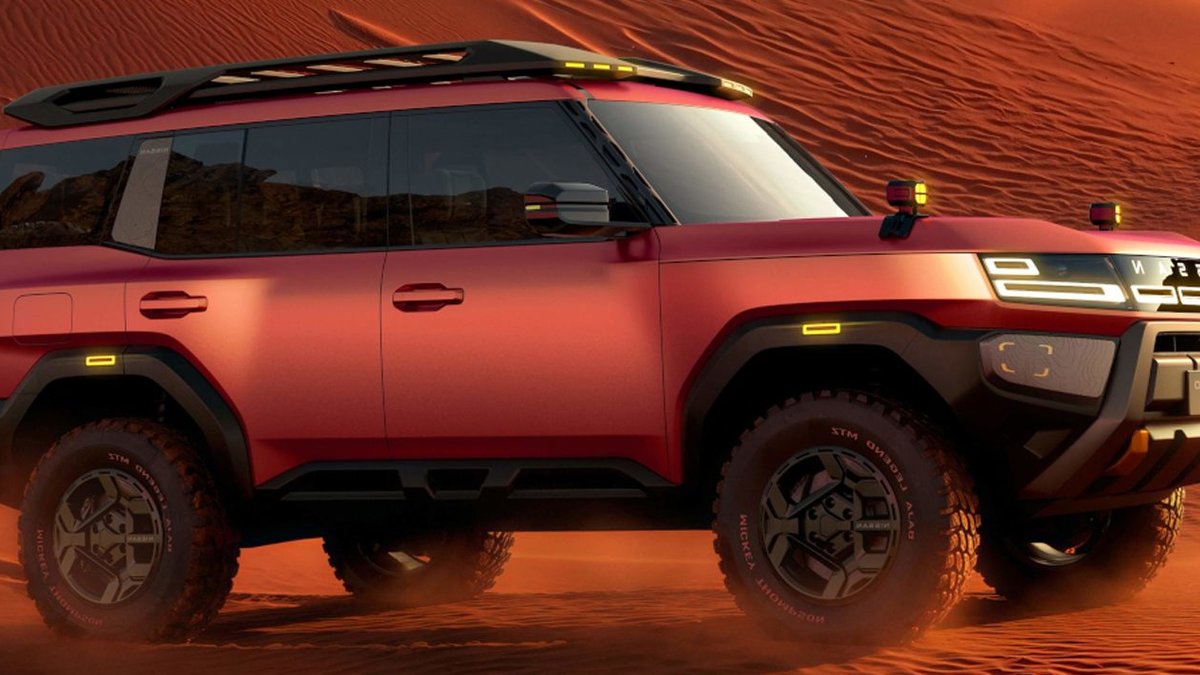
Nissan will launch five new body-on-frame vehicles within two years to simplify its product lineup and reduce development costs as it faces financial challenges.
Five new models in two years
The automaker plans to introduce these vehicles under an initiative called “China Speed,” aimed at shortening production timelines. The first model, a revived Xterra SUV, will arrive in the U.S. by 2028. Four more variants—a three-row SUV, a midsize pickup, and two Infiniti SUVs—will follow by the end of the decade.
All five models will be built at Nissan’s Canton, Mississippi, plant. They will share about 70% of their components, including platforms, powertrains, and software. This approach follows strategies used by Chinese automakers, which have pushed traditional manufacturers to adapt quickly.
Related: Mahindra XUV 3XO impresses in early long-term test
Financial pressure drives overhaul
Nissan’s financial struggles prompted the shift. The company reported a $4.7 billion net loss for the fiscal year ending March 2026, after losing $7 billion the previous year. To recover, CEO Ivan Espinosa announced plans to reduce the global lineup by 20%, cutting it from 56 models to 45.
Development timelines will shrink from 50 months to 30, and the number of unique parts will decrease by 20%. Hidemi Sasaki, deputy general manager of Nissan’s product business division, stated the changes will allow faster engineering while meeting market demands.
The restructuring organizes the lineup into three families: mid-size vehicles like the X-Trail, compact models like the Qashqai, and body-on-frame SUVs and trucks. Instead of developing models one by one, Nissan will now design entire vehicle families at once.
Modular development isn’t new for the company, but previous efforts fell short because planning couldn’t keep up. The updated system will standardize 70% of components, with only rear sections and interiors customized for each model.
Related: Mercedes-Benz GLA-CLASS Revealed for 2028
A rugged return for the Xterra
The revived Xterra, shown in a recent presentation, will have a boxy, off-road-focused design with flared fenders, an angled C-pillar, and a bold front grille. It will use the same V6 and hybrid powertrain as its siblings, along with shared driver-assist and infotainment technology.
The Xterra and its related models will lead Nissan’s body-on-frame push, though the company hasn’t ruled out expanding the strategy. For now, performance models like the Z and GT-R, as well as commercial vans, remain outside this new structure.
Nissan hopes speed and standardization will help it compete in a market where Chinese brands have gained an edge by cutting development cycles. Success may hinge on how well the company balances efficiency with the unique character of each vehicle.
Related Stories
 EV Transition Beat
Jaguar opens London flagship blending retail with art and hospitality
 EV Transition Beat
Abarth launches its most powerful electric hatchback
 EV Transition Beat
BYD targets 35 percent fleet share with M9 launch
 EV Transition Beat