Porsche unveils rare Moby Dick-inspired 911 GT2
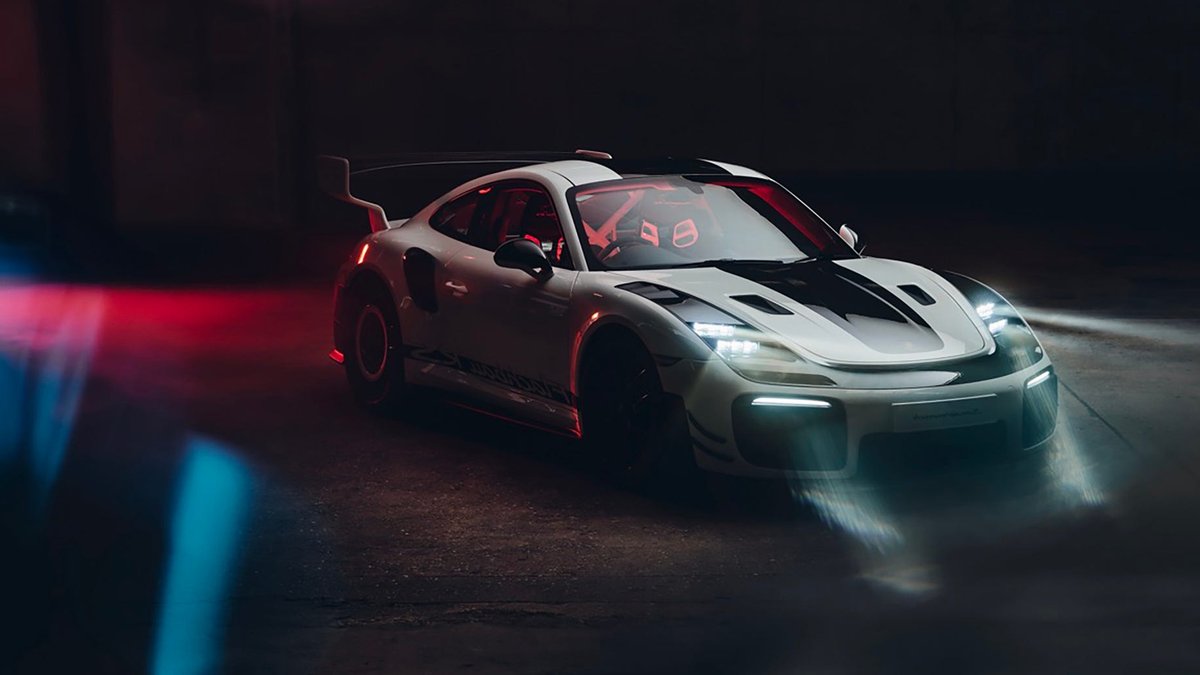
The second one-off creation from Porsche’s Sonderwunsch department since it became its own business unit in 2021 has arrived. The 911 GT2 Flachbau RS combines the brand’s iconic slant-nose 935 racecar design with modern GT2 RS hardware while honoring the original Sonderwunsch project.
The Slant-Nose Legacy
The Flachbau RS takes inspiration from the 935 racecar, a model that dominated customer GT racing in the late 1970s. Its design came from a loophole in FIA’s Group 5 rules, which required keeping a production car’s centerline silhouette but allowed changes to fender shapes for wider tires.
Engineer Norbert Singer used this rule to extend the hood’s slant to the outer edges and move the headlights into the front spoiler. The car looked radical and improved aerodynamics, helping it reach higher speeds on tracks like Le Mans. Reporters called it “Moby Dick” for its white color, wide stance, and large rear spoiler.
In 1981, Mansour Ojjeh, then head of TAG, ordered a road-legal version of the 935 with luxury features. Porsche formed the Sonderwunsch department to build it and later offered the slant-nose as a production option. From 1982 to 1989, the company sold 948 examples, all with pop-up headlamps.
A Modern Interpretation
The Flachbau RS was built for an owner who wanted to upgrade his 2018 991.2-generation GT2 RS with the Weissach package. That model already held a strong Nürburgring lap time, but the owner sought better aerodynamics and efficiency without increasing power or torque.
Related: US Army unveils next-generation hybrid tank
Porsche’s team applied Singer’s original aerodynamic ideas. To meet modern headlamp height rules, they kept only the bumper-mounted lamps from the standard GT2 RS. Low- and high-beam lighting was added to what look like louvers above the front wheels. These vents also release high-pressure air from the wheel wells.
The car debuted at the Quail, a motorsport event in Monterey, California. There, Porsche also revealed its first modern Sonderwunsch creation—a 993-generation 911 Speedster. That model was notable because the 993 was the only 911 generation never to receive a factory Speedster version.
Such bespoke projects let Porsche test design and engineering concepts that may appear in future production models. The Flachbau RS could shape how the company handles aerodynamics in its next high-performance road cars. The experimentation shows a readiness to try new approaches.
Since becoming its own business unit, Sonderwunsch has had more freedom for ambitious projects. The Flachbau RS proves it can blend classic styling with modern technology.
Porsche hasn’t said whether more one-offs are coming, but demand for such vehicles exists. Collectors pay a premium for exclusivity, and this car shows the company can deliver without sacrificing engineering quality.


