US Army unveils next-generation hybrid tank
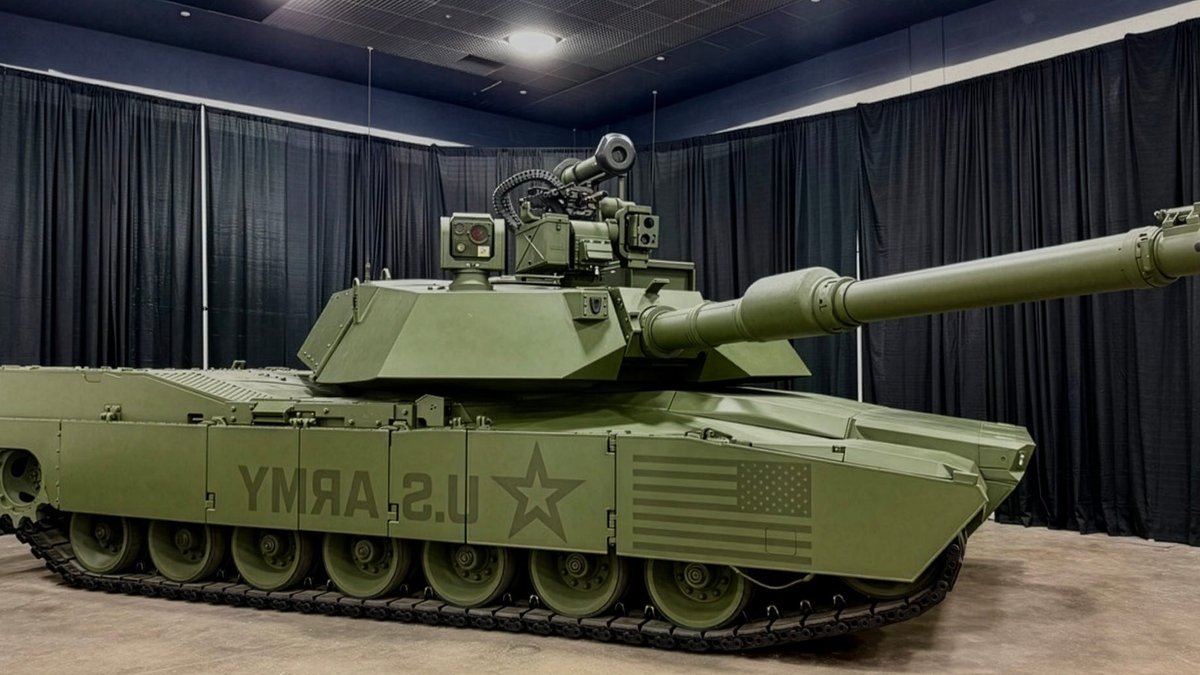
The U.S. Army’s next-generation tank, the M1E3 Abrams, made its public debut at the 2026 Detroit Auto Show. The event marked a shift from incremental upgrades to a lighter, more adaptable design built for future battlefields.
The end of the M1A2 era
The Army decided to abandon further updates to the M1A2, including the planned SEPv4 enhancement package. The move followed heavy losses in Ukraine, where Russia has reportedly lost some 4,300 tanks. Ukraine has lost many as well, including maybe two dozen U.S. Army export Abrams M1A2s. Officials determined that adding more armor and systems to the 70-ton M1A2 only increased weight without delivering the desired future capabilities.
On September 6, 2023, the Army announced it would halt SEPv4 development. Instead, it would pursue the M1E3, a tank designed to “fight and win against future threats on the battlefield of 2040 and beyond.” Testing is scheduled to begin in early 2026.
A lighter, smarter, hybrid tank
The M1E3 isn’t a complete redesign, but the “E” in its name signals major changes. The Army aims to cut its weight from over 70 tons to around 60, improving mobility and transport options. A hybrid powertrain is also in development, allowing the tank to operate with its engine off during maneuvers or while stationary. This reduces heat signature and fuel use.
Crew size will drop from four to three due to an automatic ammunition loader. The tank retains the M256 120mm smoothbore gun, though some had expected the lighter XM360. The Detroit prototype serves as a testbed, not the final version.
Related: Car key fob fails Try these fixes
The Common Remotely Operated Weapons Station (CROWS) is a key addition. It lets the crew aim and fire secondary weapons from inside the armored hull. The system includes day and thermal cameras, a laser rangefinder, and fire-control integration. The prototype also mounts a Javelin anti-tank missile on the CROWS, though its practical use in that position is unclear. The Javelin’s fire-and-forget capability and tandem warhead could help conserve main gun ammunition for heavily armored targets.
Analysts suggest the M1E3’s turret may be unmanned, with the three crew members seated in the front hull. This design appears in tanks like France’s Leclerc and South Korea’s K2. Visibility concerns remain if optical sensors fail, but some believe the tank’s software could let a single operator handle both shooting and maneuvering.
The Detroit prototype uses a Caterpillar C18 diesel engine, though this may change. The Army’s push for hybridization could offset any power gap between the diesel and the current turbine engine while improving efficiency.
The main gun’s range remains 3,000 meters. The Army released only two black-and-white images, and officials haven’t disclosed full specifications. More details will emerge when the military deems it necessary, leaving analysts to debate the tank’s potential based on limited information.


