5 sporty compacts that punched above their price
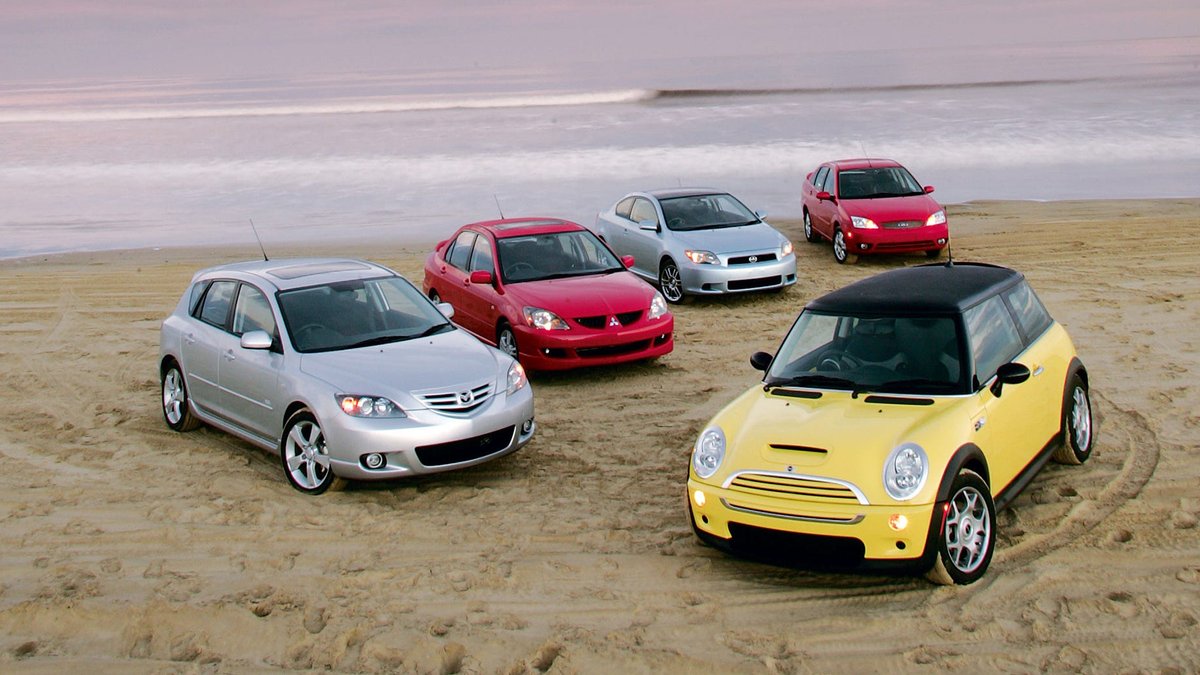
The $20,000 compact car that delivers excitement doesn’t always rely on the highest horsepower. Five sporty models recently tested revealed that torque, handling, and driver feedback often matter more than straight-line acceleration.
The Mazda3’s quiet confidence
The Mazda3 impressed with its well-rounded performance. Its 2.3-liter engine, also used in the Ford Focus ST, gained an extra nine horsepower through variable-length intake and valve timing. That change came at the cost of torque, losing four pound-feet compared to the Focus, so drivers needed to push past 4,000 rpm to feel real power.
The chassis set it apart. Fluid-filled suspension bushings and an electrohydraulic steering system minimized noise and vibration. It cornered at 0.87g and reached 65 mph through the slalom without the harsh ride of a go-kart. Optional features added unexpected value: Sirius Satellite Radio, leather seats, Xenon headlights, and a navigation system—amenities rarely found in this segment.
Mazda aimed to position the 3 as a premium compact. Whether buyers will pay extra for those upgrades remains uncertain.
The Mitsubishi Lancer’s rally spirit
The Lancer Ralliart surprised with its 162-horsepower engine, which delivered torque in a way that made it feel more powerful than its numbers suggested. The long-stroke four-cylinder pulled strongly at nearly any rpm, so drivers didn’t need to rev it high to have fun.
Related: Damaged Dodge Challenger Hellcat Hits Bring a Trailer
It wasn’t the fastest off the line, partly because Mitsubishi switched from Bridgestone Potenzas to Goodyear Eagles, saving about $32 per tire but sacrificing performance. Still, the Lancer shone in corners, sliding like a front-drive rally car when pushed. The structure felt solid, the ride firm but comfortable, and the overall experience more rewarding than most in its class.
Better tires might have improved its test results. On real roads, though, it was hard to match.
The Ford Focus ST’s mixed signals
The Focus ST looked sporty, but its 2.3-liter engine’s 151 horsepower fell short of the old SVT model’s 170. It consumed less fuel than its predecessor, though the savings wouldn’t cover much beyond a weekend at the track.
Ride comfort was its strength. The ST had the smoothest suspension in the group and a quiet cabin, making it ideal for long trips. For those seeking raw speed, however, it fell short.
The car wasn’t flawed—just less exciting than its appearance suggested.
Related: H2Sky unveils aviation fuel‑cell stack breakthrough
The Scion tC’s identity crisis
The Scion tC borrowed design elements from BMW, Volvo, and VW, but the result lacked a distinct character. The details were polished—a panoramic glass roof, spacious cargo area, and attractive wheels—but the driving experience didn’t live up to the looks.
A long wheelbase and vague steering made it feel disconnected, while the suspension tended to snap into oversteer if the driver lifted off the gas mid-corner. TRD performance parts were available, but the stock version didn’t inspire much trust.
It wasn’t a poor car, just one that struggled to distinguish itself in a competitive segment.
The most compelling compacts didn’t need the highest power to feel fast. They succeeded through the right mix of torque, handling, and feedback—qualities the Mitsubishi Lancer delivered best.
For buyers who value driving enjoyment over specifications, the choice was obvious. The others were still solid options—just less memorable.


